AGORIANI
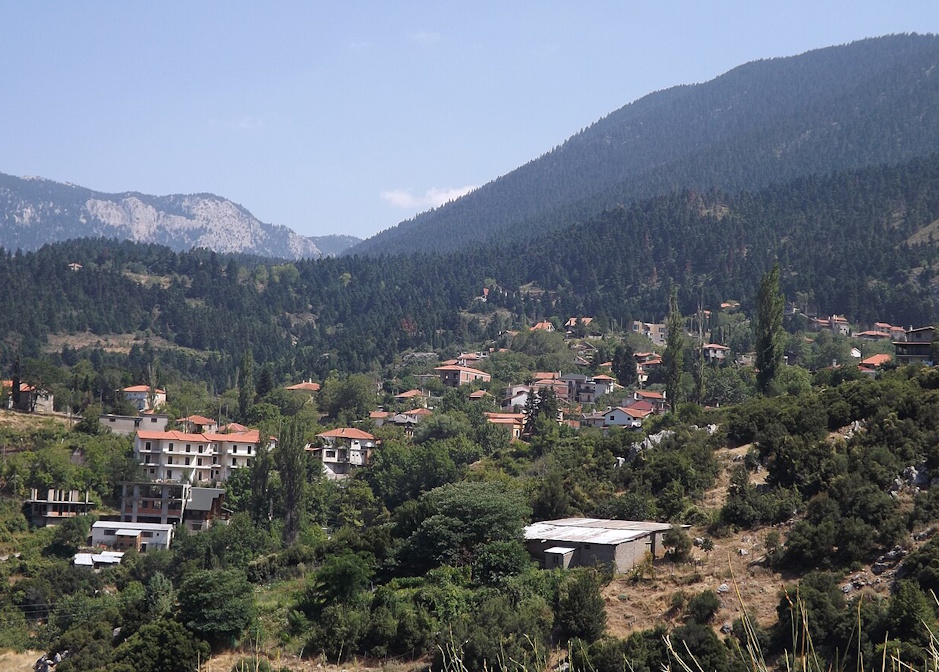
Ano Agoriani (or Eptalofos or Eptalofo) is a settlement in Central Greece and the Regional Unit of Phocis.
 |
 |
Left: Agoriani (Eptalofos)
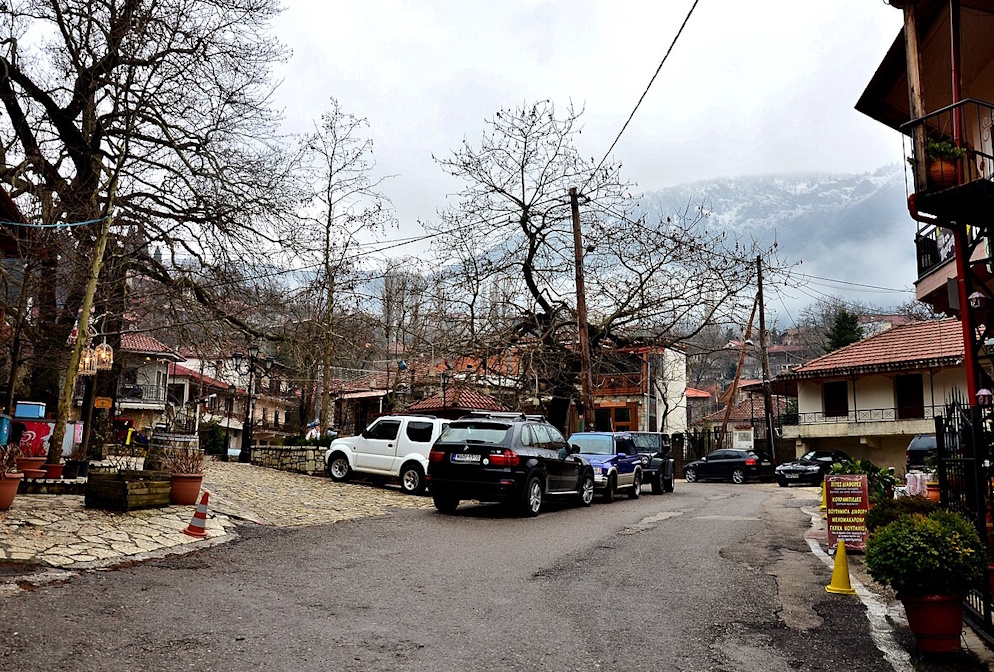
Right: The village's central square
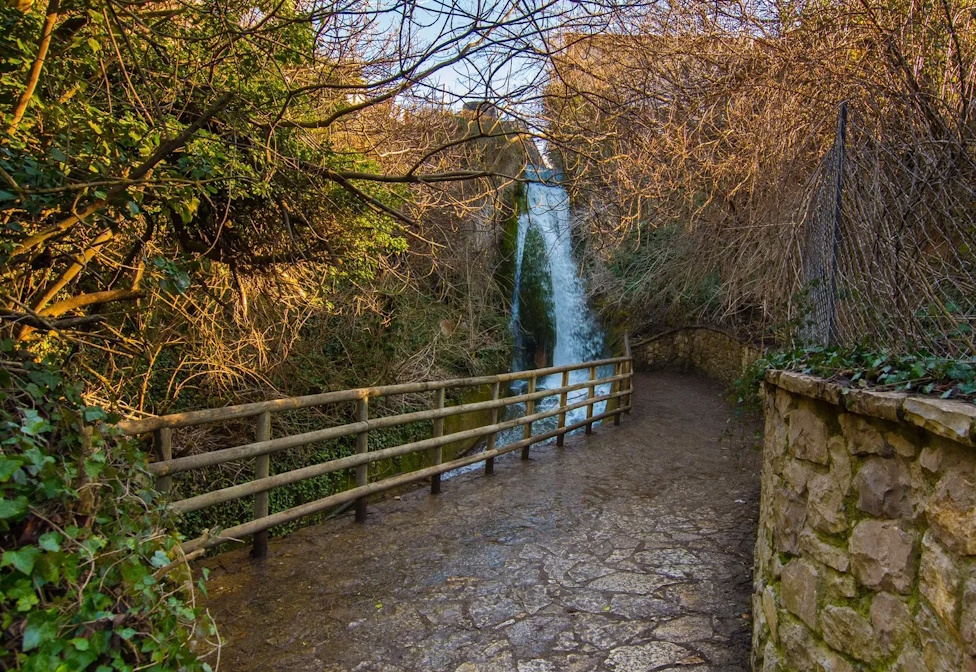
Eptalofos is situated at an altitude of 830 meters on the northeastern slopes of Mount Parnassus, approximately 58 kilometers (by road) northeast of Amfissa (the seat of the municipality). In recent years, the village has experienced significant tourism growth, owing to its proximity to the Parnassus ski centers and its location amidst a fir forest. Snow cover within the settlement is very common during the winter months. Tourism development has helped retain the local population, which has actually seen a slight increase over the last few decades. The Agoriani waterfall is located near the village's central square.
It was officially recorded as a settlement following the Revolution of 1821 under its Ottoman-era name, "Ano Agoriani"; in 1836 (Government Gazette 80A - 28/12/1836), it was designated as the seat of the then-municipality of Charadraioi. In 1912 (Government Gazette 261A - 31/08/1912), it was named the seat of the newly established community of the same name, and in 1927 (Government Gazette 206A - 28/09/1927), it was renamed Eptalofon. Under the Kallikratis Plan and its subsequent amendment, Kleisthenis I, it forms—together with Alataries and Zambeios—the community of Eptalofon, which falls under the Parnassos Municipal Unit of the Municipality of Delphi; the 2021 census recorded a population of 380 inhabitants.
Location
Eptalofos is surrounded by seven wooded peaks; the highest is Pyrgakia (at 1,719 and 1,651 meters), which also houses the settlement's fire lookout post. Next in height are the peaks of Varidi (1,687 m), Krystallaki (1,674 m), Kokkinovrachos (1,605 m), Psili Rachi (1,532 m), and Anonymi (1,342 m). A section of the Gravia plain and Mount Kallidromo in the distance are also visible from the village. Two hiking trails start from the village: the E4 trail heading towards Delphi and Trail 22 leading to Polydroso.
Sights in Agoriani
Central square
Agoriani’s square, with its famous fountains and centuries-old plane trees, is the village's busiest spot. Here, there are several options for coffee and *tsipouro* accompanied by tasty *mezedes*, as well as tavernas serving traditional dishes.
Agoriani Waterfall
A visit to the village's landmark is a must. A paved path starting from the village square leads to the area's natural attraction.
7 Springs of Agoriani
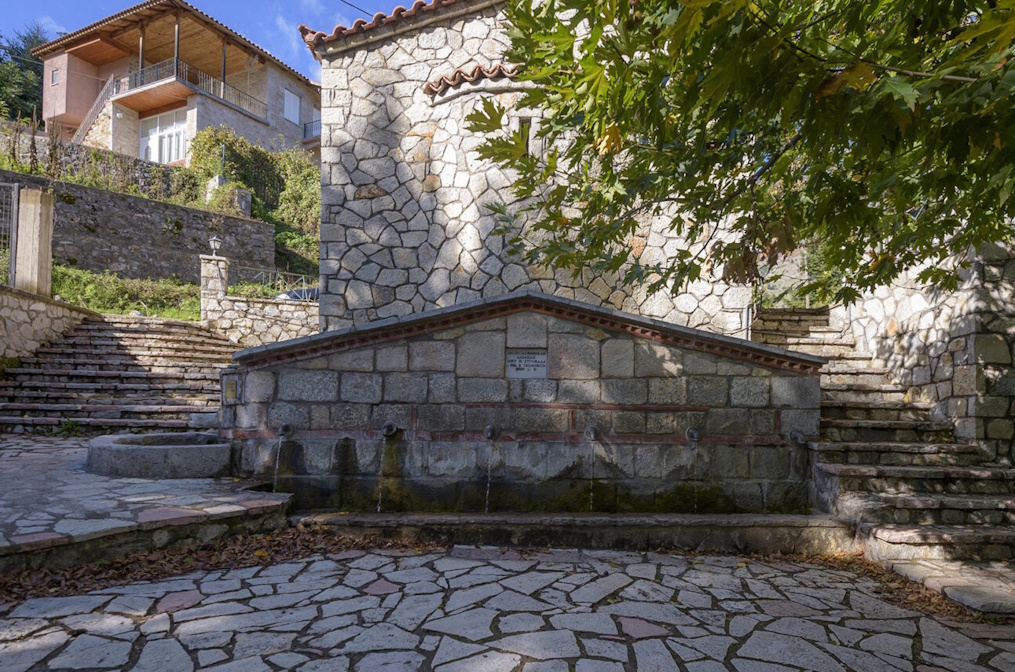
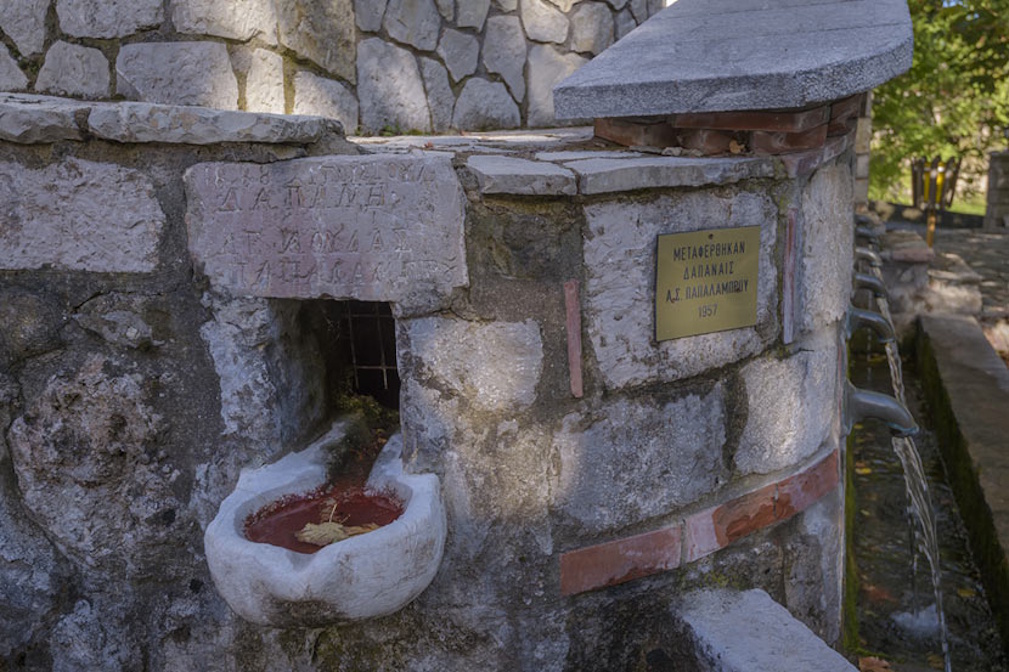
It is located just a few minutes from the village square and is considered an ideal place for relaxation and rejuvenation. The small church of Agioi Anargyroi, dating back to the 19th century, is built over a spring; its waters flow from seven spouts located at the rear of the church. Locals also refer to them as the "Seven Springs."
Agoriani Folklore Museum
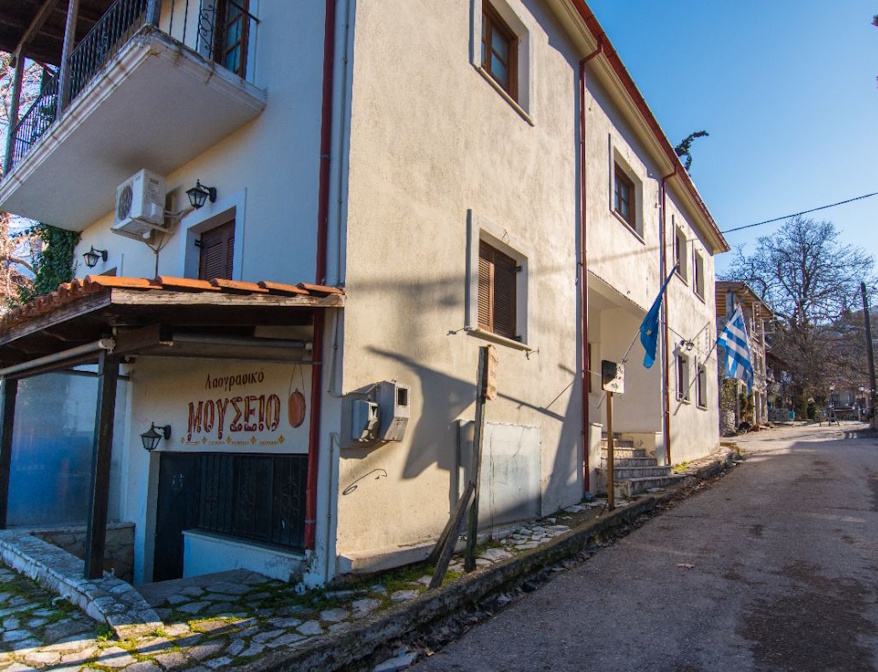
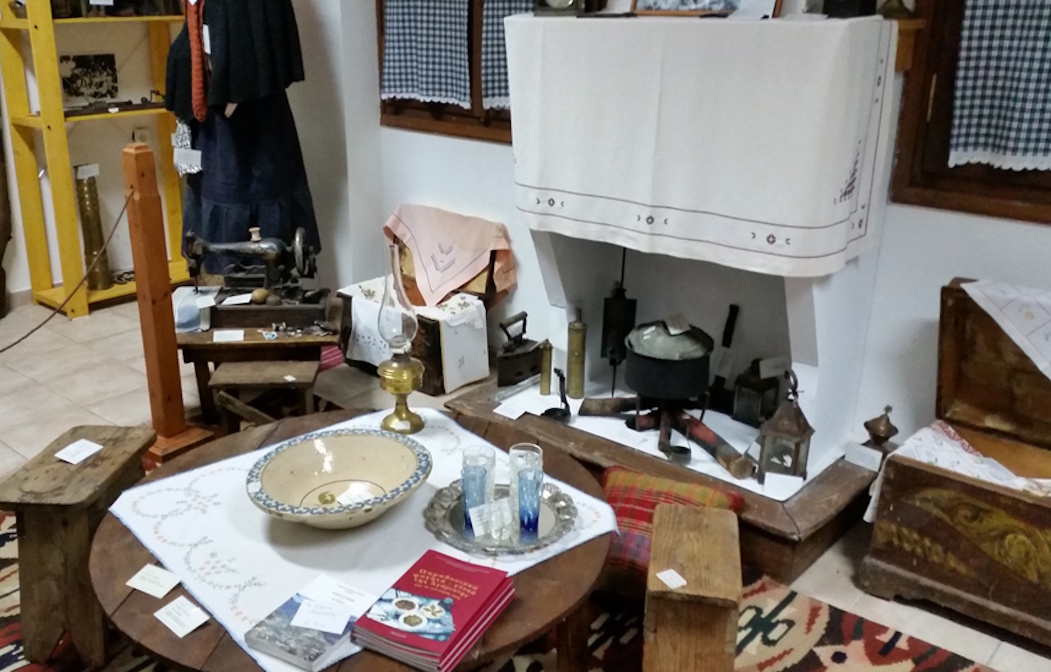
It is located in the center of the settlement, very close to the village's main square. A visit to the museum offers the traveler the opportunity to gain firsthand insight into the local customs and traditions, as well as the way of life in times past.
 |
 |
Left: Agoriani Folklore Museum
Right: Folklore Museum (interior)
Church of Saint Paraskevi
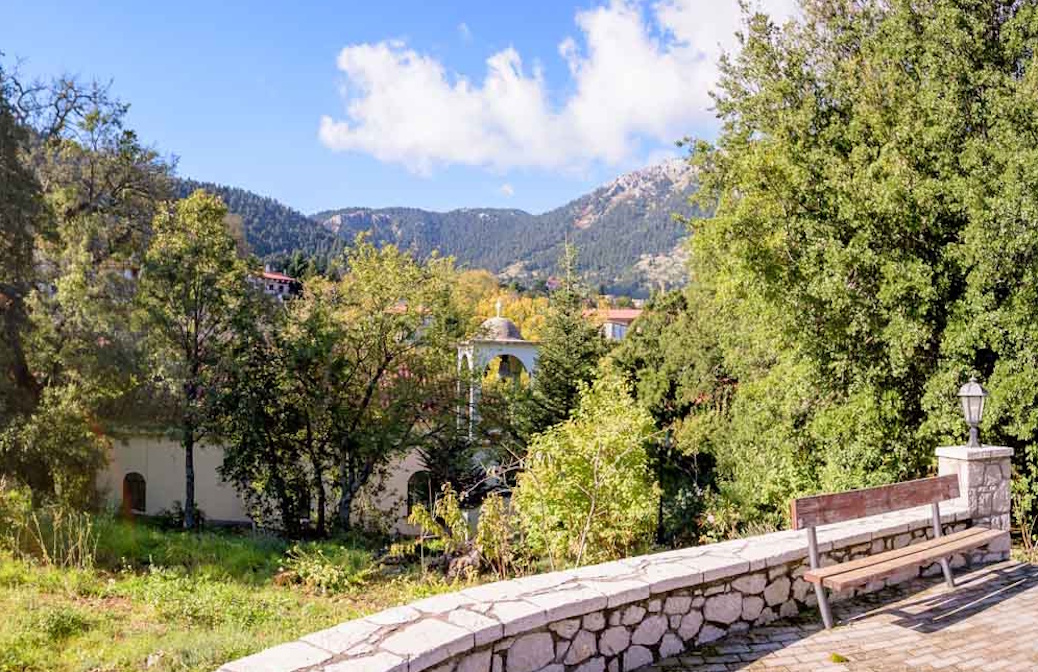
It is a beautiful little church with an impressive garden that, during spring and summer, is home to a wide variety of aromatic and ornamental plants. Just above the church, there is an open area featuring a fountain and a lovely view of the slopes of Mount Parnassus and the plain of the Boeotian Cephissus. It is said that the writer Angelos Sikelianos penned several of his masterpieces there.
Waterfall with the small wooden bridge
As you head down from the square towards the Folklore Museum and continue for about 300 meters past the "Grizia Arkouda" (Grey Bear) tavern, you will come across the village's second waterfall. At this spot, there is a bench, a stone fountain, and a small wooden bridge.
Vasilikí Spring
The Vasiliki Spring is nestled amidst dense vegetation and some of Agoriani’s most impressive chalets. According to locals, the water flowing from the spring aids digestion. The route is ideal for a walk starting from the village square and for relaxing under the plane trees.
Agía Triada
It is a beautiful small chapel surrounded by fir trees, situated in a stunning location reminiscent of an Alpine landscape. The route begins at the square in Agoriani and follows the European E4 trail, with the majority of the path consisting of a smooth dirt road.
Mana Spring
This is an impressive natural landmark of the village. The idyllic route begins at the small upper square of Agoriani. By following the flow of the water that leads to the waterfall, you will reach the spring where the water gushes forth from the depths of the earth.
Eptastomo
The impressive "Eptastomo" (Seven-Mouthed) chasm is located on the western slopes of Mount Parnassus, near the Kalania site, at an altitude of 1,300 meters. In this cave—named for its seven openings—the snow never melts, as the internal temperature remains at or below 0°C. Access to the chasm is restricted to highly trained individuals equipped with specialized gear; however, one can carefully glimpse part of the ice formation from above. A sign pointing toward Eptastomo and Kalania can be found at the Dokano location—7 km along the road from Eptalofos to Arachova, and approximately 3 km before the turnoff for the Parnassus Ski Center.
The small church of Saints Anargyroi
The small church dates back to the 19th century and is built over a spring; its waters gush from seven spouts at the rear of the building. Locals also refer to them as the "Seven Springs."A short, leisurely walk from the square of Agoriani brings you to this cool oasis. Follow the small road located opposite the village's main church.
 |
 |
Left: Agoriani Waterfall
Right: Church of Saint Paraskevi
 |
 |
Left: The small church of Agioi Anargyroi with the 7 springs.ς
Right: The 7 Springs in Agoriani