MAKRINITSA
Makrinitsa is a traditional settlement in the Municipality of Volos, in the Region of Thessaly (Kallikratis programme). It has a population of 694 inhabitants, according to the 2011 census. Most of its residents are engaged in tourism-related businesses.
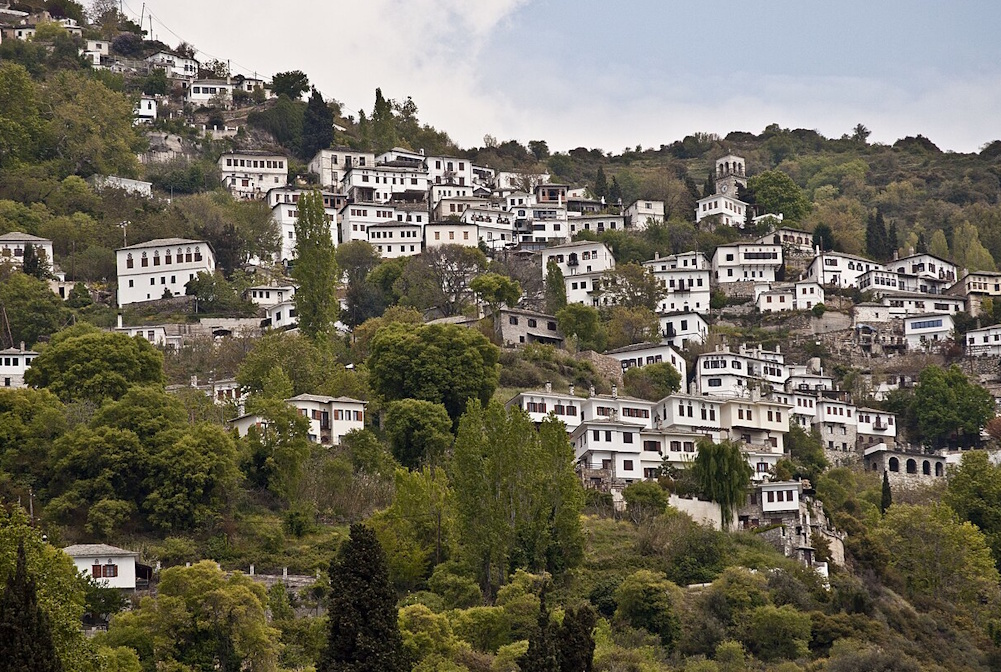 |
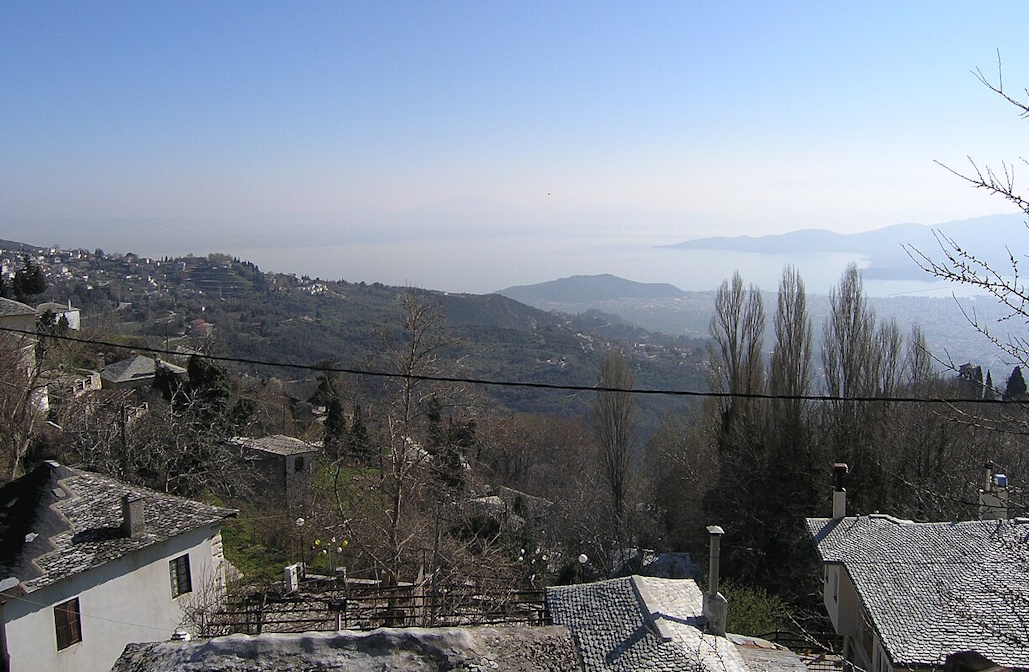 |
Left View of Makrinitsa
Right: View of Mount Pelion, Volos, and the Pagasetic Gulf from Makrinitsa.
History
According to available sources, the origins of the settlement date back to the Middle Ages and are linked to the establishment of monks.Shortly after the first sack of Constantinople, between 1204 and 1215, the local ruler and wealthy landowner Konstantinos Maliasinos founded the Monastery of the Theotokos Oxeia Episkepsis (or Makrinitissa) on Mount Pelion. A settlement—initially small—developed around it, taking the name Makrinitsa from the neighboring monastery.
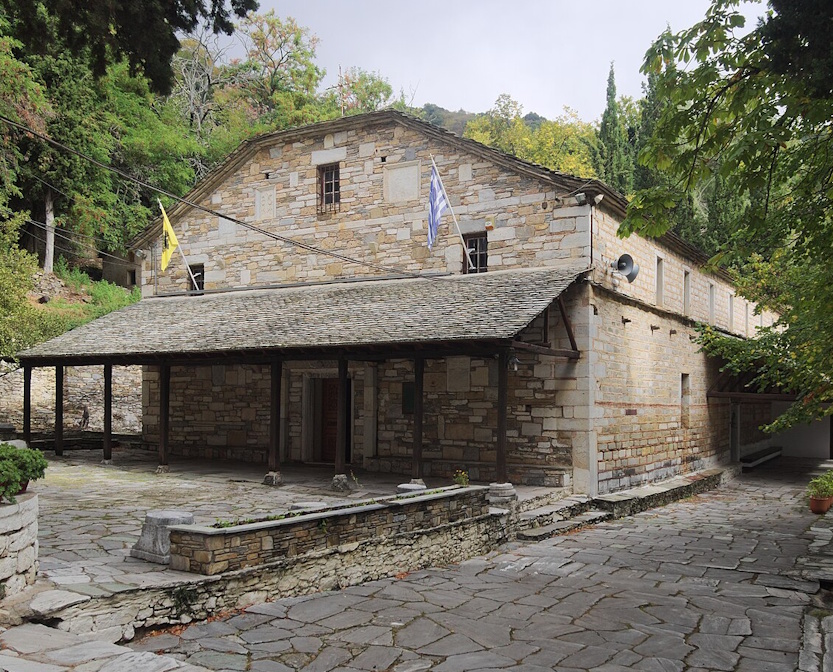
The monastery founded by Maliasinos fell into obscurity during the 17th century and eventually collapsed. However, the building materials and sculptures from that structure were reused in the construction of the Church of Panagia (1767), which is dedicated to the Dormition of the Theotokos. The settlement grew rapidly during the 18th century thanks to trade and tanning, and by the early 19th century, it had become the most powerful and populous town in the region. Indeed, like other settlements in the Pelion area, it had been granted special privileges by the Ottomans. Undeniable evidence of Makrinitsa’s flourishing is found, among other things, in its magnificent mansions, most of which were built between 1750 and 1830.
Makrinitsa was one of the villages that rose up during the Revolution of 1821. Following the declaration of the revolution in Pelion by Anthimos Gazis, the inhabitants of the region besieged Velestino and Volos; however, the siege failed due to the intervention of Dramalis. Subsequently, the Ottomans besieged Makrinitsa, which eventually fell after putting up fierce resistance, and the revolution in the area was suppressed.
Makrinitsa also played a leading role in the Thessaly uprising of 1878. The most significant battle of this uprising took place in Makrinitsa. Local revolutionary forces and the town's inhabitants—led by Margarita Basdeki—put up fierce resistance but were ultimately overcome when Turkish reinforcements arrived in the area. The uprising ended through British mediation. Three years later, in 1881, Makrinitsa was incorporated into the Greek state along with the rest of Thessaly.
Following liberation, Makrinitsa became a municipality, while from 1912 to 2010 it existed as a separate community. Tourism development in the area began in the post-war period and continues to this day. Nowadays, the village is one of the most renowned destinations in Pelion; many of its old mansions have been renovated and converted into hotels, while the production of traditional goods—most notably tsipouro, pasta, honey, and jams—has flourished.
Sights
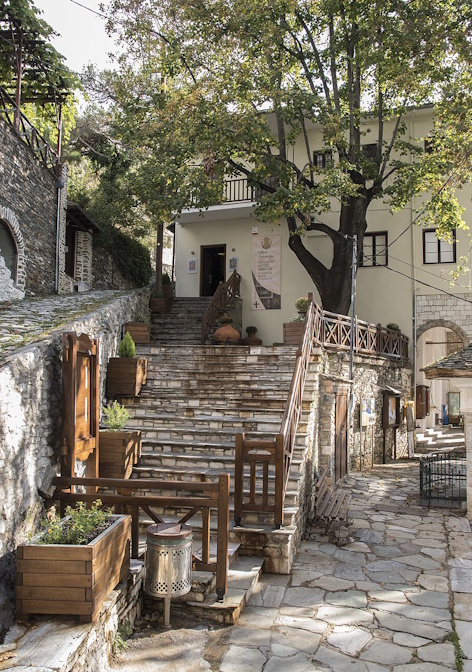
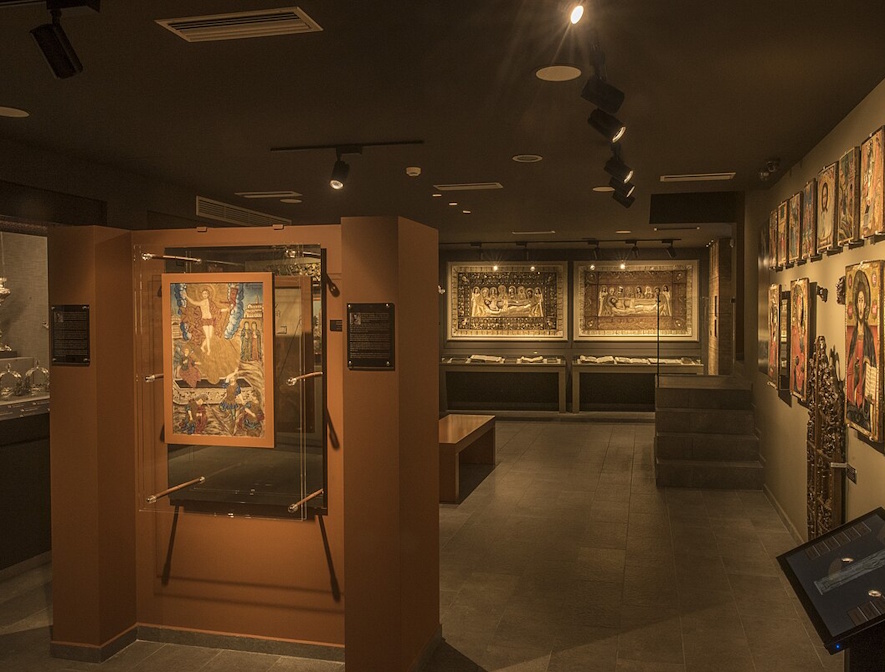
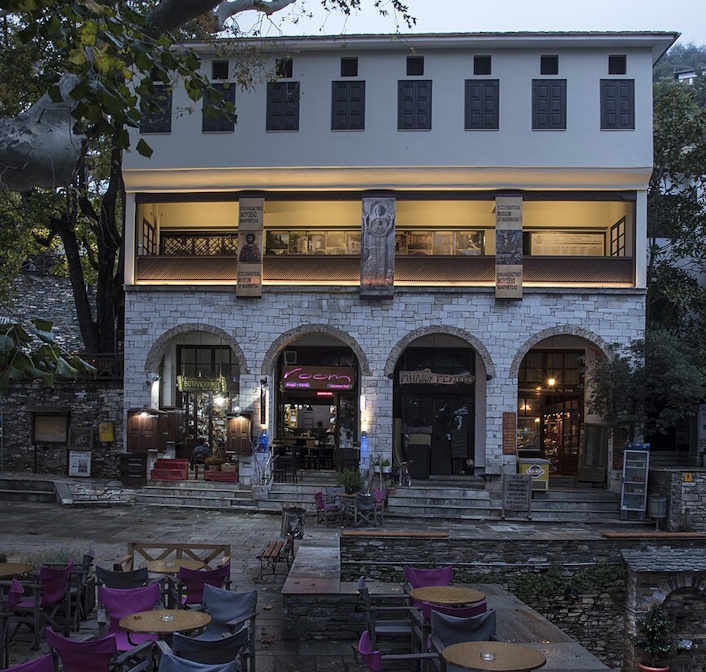
The Byzantine Museum of Makrinitsa, "Oxeia Episkepsis" (The Visitation), is housed in the village's central square and displays artifacts dating from the 13th to the 20th century. It is unique in the wider region and also hosts educational programs for schools and educational institutions.The Museum of Folk Art and History of Pelion is housed in the Topalis Mansion—built in 1844 below the central square of Makrinitsa and a representative example of Pelion architecture.
In the beautiful square of Makrinitsa stands the "Theophilos" Coffeehouse, renowned throughout Greece and abroad for a mural by the celebrated folk painter Theophilos Chatzimichail. Today, the building is designated as a "historic preserved monument" and is owned by the Community of Makrinitsa. The composition of the mural depicts a celebration at the encampment of the klepht leader Katsantonis, set amidst a natural landscape that includes a small stream at the bottom. Katsantonis is the dominant figure; he stands out from his comrades due to his larger stature, while he plays the *tambouras* with his weapon resting at his feet. The other fighters are roasting lambs on spits, playing music, feasting, and dancing. The great architect Le Corbusier wrote of Theophilos in an article, noting among other things: "...He is a painter born of the Greek landscape. Through Theophilos, here are the landscape and the people of Greece: red earth, pine forests and olive groves, the sea and the mountains of the gods, people bathed in a boldly perilous serenity..."
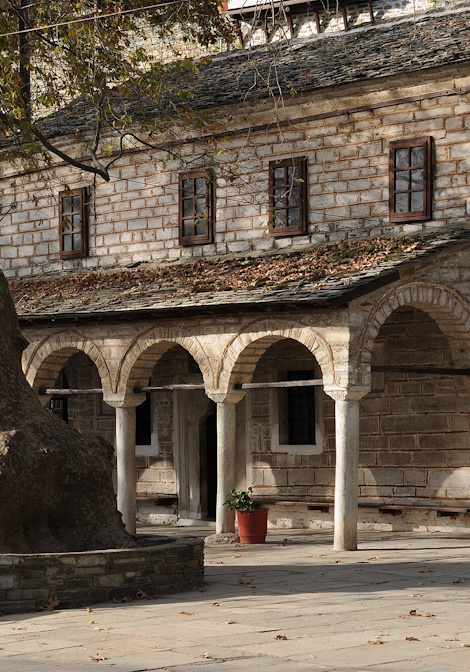 |
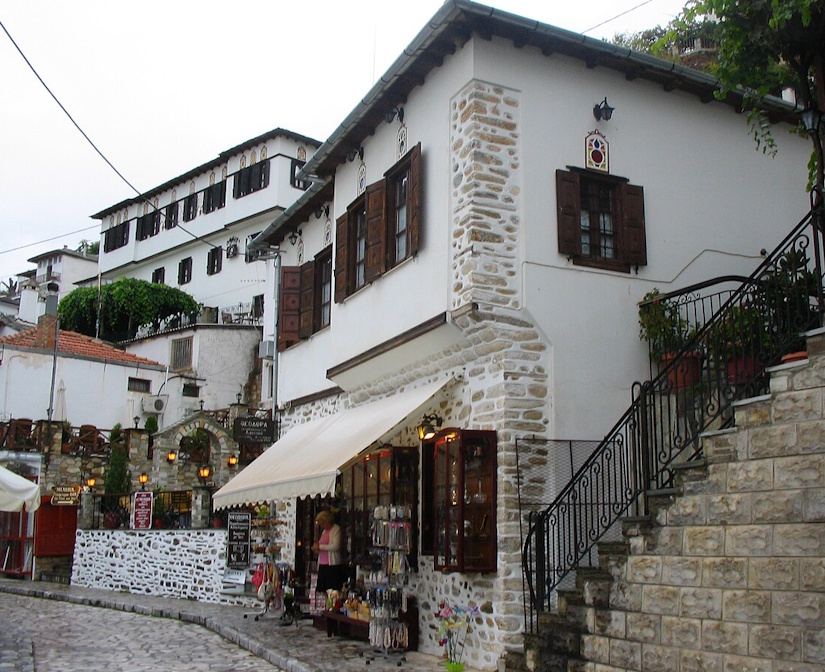 |
Left: Church of Saint John the Forerunner (1806)
Right: A street in Makrinitsa
The Church of Saint John the Forerunner, built in 1806 according to an inscription, is also located in the central square. The church features rich stone-carved ornamentation, the work of the stonemason Theodosios from Vracha, Agrafa.
 |
 |
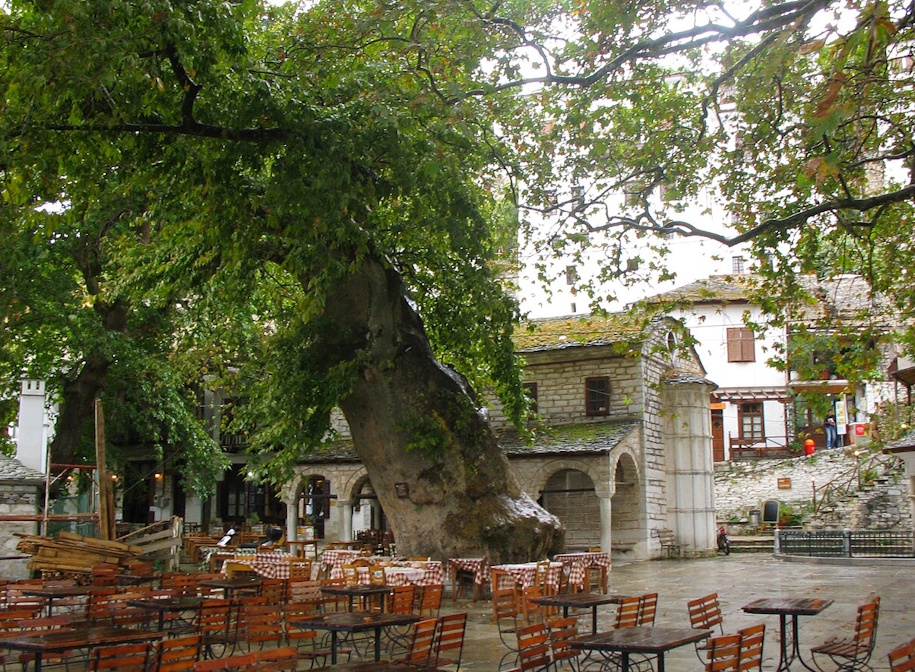
Left: Makrinitsa Square
Right: The Church of the Dormition of the Theotokos (1767)
Architecture
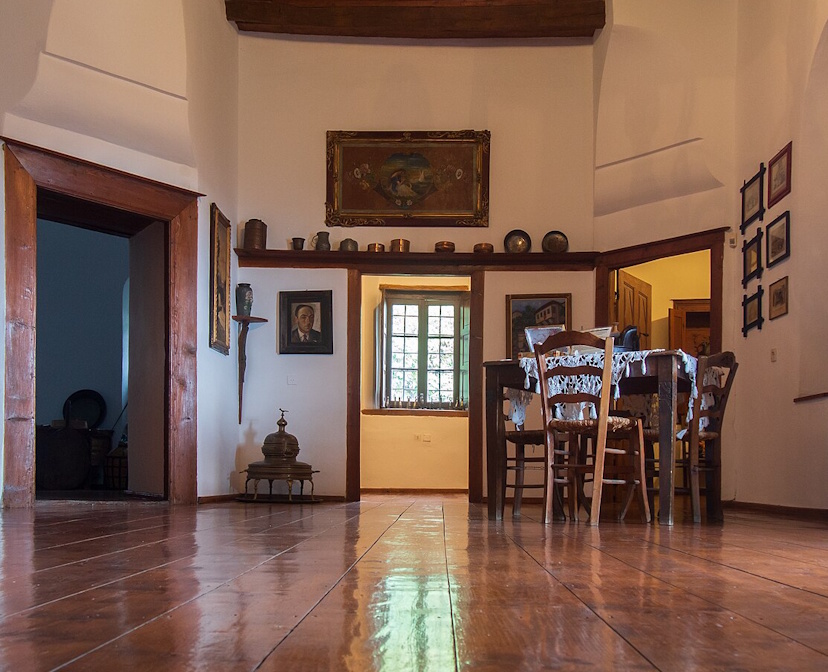
The buildings in Makrinitsa are constructed according to the tradition of Pelion architecture. The houses are two or three stories high with thick stone walls; key features include stone roofs and rich painted and wood-carved decoration on the upper floors. The ground floor has few openings, whereas the upper floor features numerous windows and often projects slightly beyond the level below—a characteristic trait of Ottoman-era architecture. The houses are also distinguished by their decorated ceilings and wood-carved doors and shutters.The Topalis Mansion is a significant manor in Makrinitsa; built in 1844, it currently serves as a folklore museum. The building is a fortified three-story residence featuring loopholes and a defensive turret on its roof. The Topalis family donated the mansion to the community of Makrinitsa in 1932 to house the folklore museum, which today holds over 1,500 exhibits.
 |
 |
Left: The interior of the Topalis Mansion, which houses the "Museum of Folk Art and History of Pelion."
Right: Steps leading to the Byzantine Museum of Makrinitsa, in the central square.
 |
 |
Left: Part of the first floor of the Byzantine Museum of Makrinitsa
Right: Evening in Makrinitsa Square
Culture
Makrinitsa is known for the local custom of the "Maides"—a traditional event featuring costumed participants—which is also found in other villages of Mount Pelion, though without the same level of popularity and vitality. The local *syrtos* dance is also a distinctive feature.The Finos Film war drama *The Schoolmistress with the Blonde Hair* (1968–1969), starring Aliki Vougiouklaki and Dimitris Papamichail, was filmed in the village.