THERMOPYLAE
Thermopylae is a lowland village in Central Greece, located in the Regional Unit of Phthiotis at an altitude of 30 meters.
Thermopylae is situated in the center of the former prefecture, just south of the historic pass of the same name, located between Mount Kallidromo and the Maliac Gulf. It is built on the northwestern foothills of Mount Kallidromo, 17 km southeast of Lamia and 25 km west of Kamena Vourla. Motorway 1 runs to the northwest, with the Spercheios River lying further beyond; the Thermopylae Hot Springs and the Leonidas Monument (commemorating the 480 BC Battle of Thermopylae between Greeks and Persians) are located to the west, while the town of Molos lies 10 km to the east; additionally, the old Athens-Thessaloniki National Road passes along the southern edge of the settlement.
On "Kastraki" hill—located to the southwest at the "Chalkomata" site—there are well-preserved Hellenistic-era fortification remains attributed to ancient Rodountia, an Aetolian stronghold built to repel Roman attacks; consequently, the area has been designated an archaeological site. A significant tourist attraction located in the same direction—and within the archaeological site itself—includes a thermal spring (renowned since antiquity), a hydrotherapy center, and two hotel complexes.
Administrative details
The village's old name, dating back to the Ottoman era, is Drakospilia; it is recorded under this name following liberation, when it was officially annexed in 1835 to the then-municipality of Oitai (Trachinos). In 1919 (Government Gazette 95A - 03/05/1919), it was designated the seat of the community of the same name, and in 1955 (Government Gazette 157A - 21/06/1955), it was renamed Thermopylae. Under the "Kallikratis" program and its "Kleisthenis I" amendment, it—along with Loutra Thermopylon—forms the Community of Thermopylae within the Municipal Unit of Lamieis (Municipality of Lamia); according to the 2011 census, it has a population of 295 inhabitants. In the 2001 census, the population was 273.
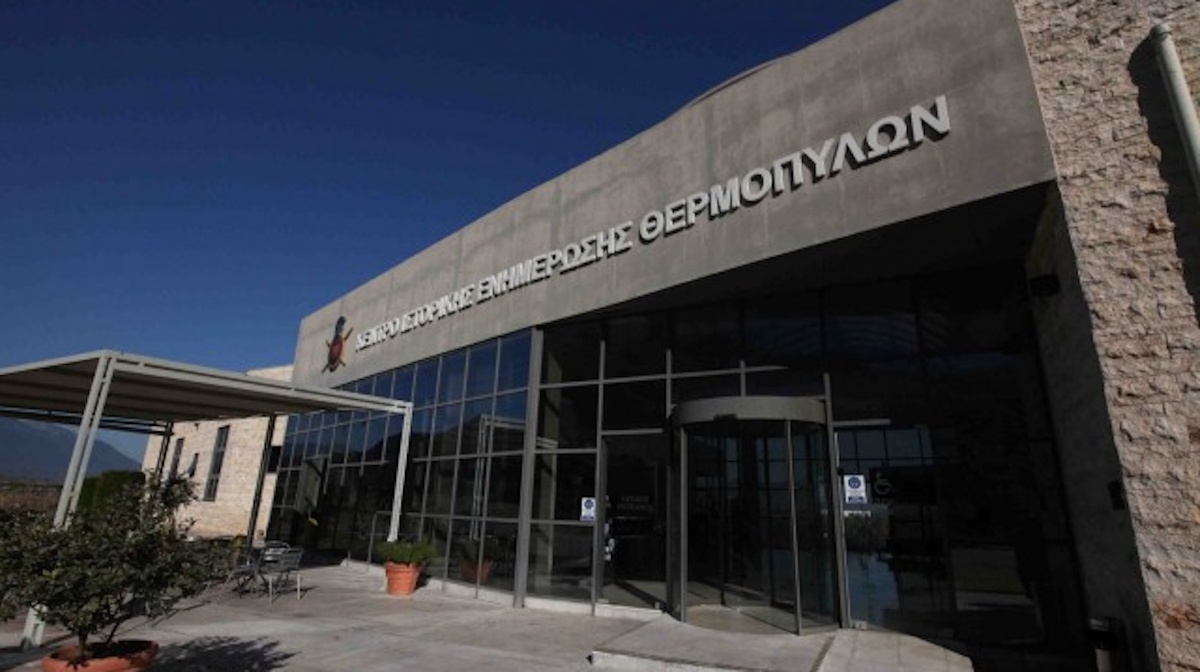
Thermopylae Historical Information Center
The Thermopylae Historical Information Center (KIETH) of the Municipality of Lamia is located at Thermopylae, near the Leonidas Monument. The center opened to the public in August 2010 as part of the Thermopyleia celebrations; it is an initiative of the Municipality of Lamia, which—with funding from the European Union via the NSRF (ESPA) 2007–2013 operational program—undertook the design and implementation of this pioneering and innovative information center.The 878 m² building is shaped like a spearhead pointing toward the direction from which the Persians entered Thermopylae. The Center complements the archaeological site by providing visitors with information about the Battle of Thermopylae and the area's topography; geological shifts have altered the landscape, making it impossible to fully grasp the original nature of the pass and the battlefield itself.
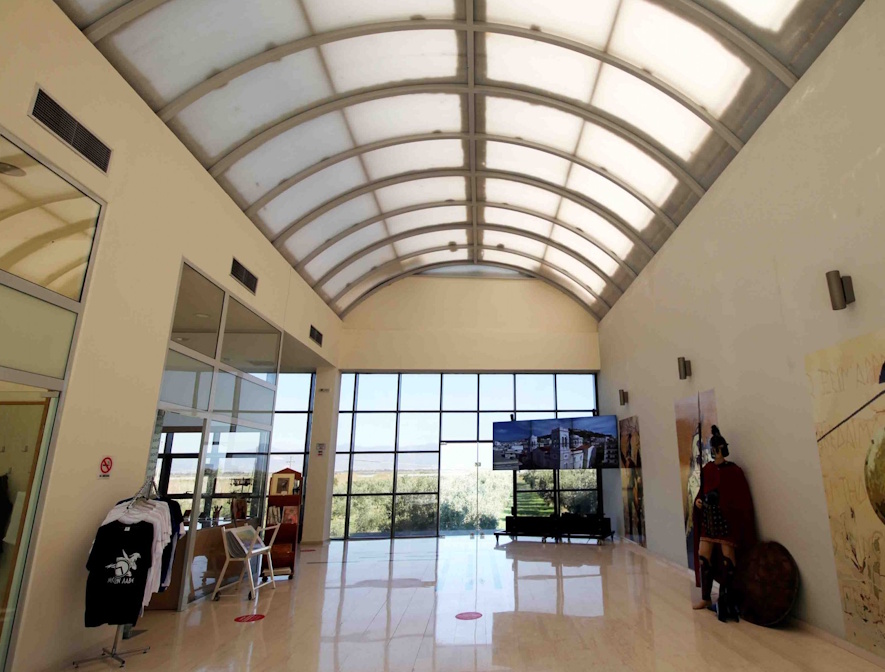
Visitors to the site can explore three halls and—leveraging cutting-edge tools and technologies—travel back 2,500 years through a multilingual virtual tour featuring 3D digital visualizations and audiovisual media. The first hall, named "Leonidas," serves primarily as a venue for seminars and lectures. It also functions as a waiting area where visitors can watch a four-minute introductory video to gain a brief overview of the Center’s program and the Municipality of Lamia.
Next is the "Dienekes" hall, named in honor of the brave and distinguished Spartan warrior from the Battle of Thermopylae. Here, a short 3D film recreating the battle is screened; wearing special glasses, the visitor is transported into an impressive setting, witnessing the events of the battle and learning about the military equipment used by the Greeks and the Persians.
Finally, in the third hall—named "Thermopylae"—visitors can learn about the full context of the Persian Wars through eight interactive touchscreens. The first screen covers the events leading up to the Battle of Thermopylae—specifically, the initial phase of the Persian Wars, spanning from the Ionian Revolt to the Battle of Marathon. The second focuses on the Battle of Thermopylae itself; beyond reenactments of the events of those three days, it provides detailed information on the key figures and the equipment used by both armies. The third screen covers the Naval Battle of Artemisium, which took place almost concurrently with the battle at Thermopylae. Finally, the last screen comprises two sections. The first deals with the aftermath of the battle and the ultimate outcome of the Persian Wars, referencing the Naval Battle of Salamis and the Battle of Plataea, as well as the broader impact on world history. The second section addresses the event's cultural legacy, specifically its influence on sculpture, painting, poetry, and literature.
The 3D video and the informational content for the interactive screens were produced under the supervision and scientific guidance of the Foundation of the Hellenic World, and are designed for audiences ranging from preschoolers and students to older adults.
 |
 |